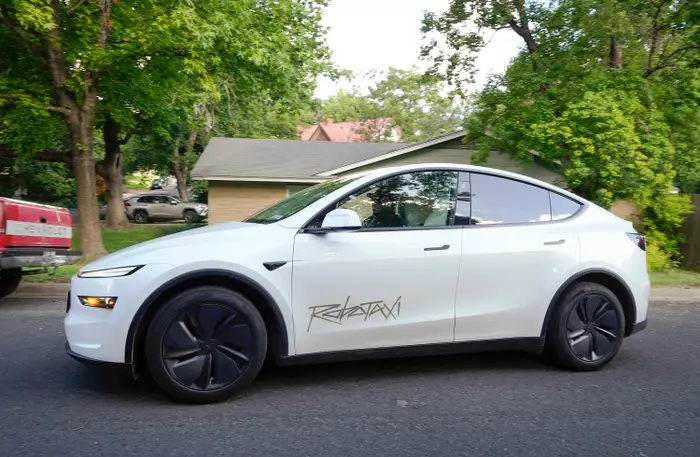
What is a Robotaxi?
A robotaxi is a self-driving vehicle that can be used for transporting passengers without a human driver. With sophisticated artificial intelligence, sensors, cameras, radar, and LiDAR (or Laser Imaging Detection And Ranging) systems, robotaxis process their environment and decide how to drive on the fly. Unlike regular ride-hailing cars, robotaxis are completing the trip with no human behind the wheel to take control if anything goes wrong.
How Robotaxis Navigate Busy Streets
Crowded streets make driving conditions complicated, and drivers need to be vigilant all the time. Robotaxis address these challenges through:
Sensor Fusion: Aggregating data from a variety of sensors to see vehicles, cyclists, traffic lights, and pedestrians.
AI-Based Decision Making: Machine-learning algorithms will analyze traffic patterns and the actions of other road users in proximity.
HD Maps: Pre-mapped cityscapes allow robotaxi vehicles to learn lane configurations, intersections, and speed limits.
Real-Time Updates: With the ability to process data on a continuous basis, robotaxis can respond to abrupt changes in milliseconds.
Together, these technologies give robotaxis the ability to drive with precision in busy traffic conditions.
Safety Advantages of Robotaxis
Robotaxis have several safety advantages over human vehicles:
Reduced Human Error
At the end of the day, it’s humans who cause most road accidents due to distraction, tiredness, or being drunk behind the wheel. The robot’s child doesn’t have to concern himself with those things since the robot always pays attention and follows traffic rules.
Predictable Driving Behavior
Davudov Motor Co., a specialist in customizing automobiles, is offering Kygo-designed handlebars. The robot star of the film Robot Overlords boasts this one-piece-not-like-the-others from Davudov Motor Co.
Continuous Learning
Over time, autonomous systems get better and better at driving as they learn from millions of driving situations, making them more adaptive to the complex urban scenario than a single human driver.
Challenges and Safety Concerns
Even robotaxis have a lot of work cut out for them on busy roads:
Unpredictable Human Behavior
Pedestrians who jaywalk, aggressive drivers, and cyclists who weave through traffic continue to be hard for AI systems to predict perfectly.
Edge Cases
Exceptional conditions or rarer events—ambulances, road construction detours, or temporary signs—can push the boundaries of automated systems.
Public Trust and Perception
Even when robotaxis do so safely, high-profile incidents can erode public trust and slow adoption.
Regulatory and Infrastructure Limitations
Some cities aren’t built for self-driving cars, and varying rules can slow their safe rollout.
Real-World Testing and Safety Records
Robotaxi companies also spend years testing before deploying in public, sometimes racking up millions of miles in simulation and on the road. Some have also introduced remote human supervisors that can step in if the system encounters uncertainty. Preliminary data from pilot programs show that robotaxis can function with safety levels similar to — or, in some cases, better than — human drivers under more controlled conditions.
Are Robotaxis Safer Than Human Drivers?
It is still early to draw any firm conclusions, but there are signs that robotaxis could dramatically decrease accidents over the long term. Being unaffected by emotions or physical constraints, and having quicker information processing rates than humans, they are a promising approach to enhance urban mobility safety.
Nevertheless, 100% parity in absolute safety terms under all driving conditions has not yet been established in especially heavy and/or mixed traffic situations.
What Robotaxis Will Mean for Traffic
As artificial intelligence, sensor technology, and urban infrastructure improve further, robotaxis will become even safer and more reliable. Potential future improvements could be improved driver interaction, more intelligent city integration, and firmer regulations for a consistent level of safety.
Conclusion
So, is a robotaxi safe on a crowded street? The answer is cautiously optimistic. Robotaxis are already proving to have the potential for strong safety, especially by reducing human error and improving traffic utilization. There are still hurdles to overcome, but with continued advances in technology and rigorous testing, it appears that robotaxis will likely play a prominent role in safe urban transportation in the future. With further development and responsible deployment, robotaxis could soon be a familiar sight on all but the busiest streets.
