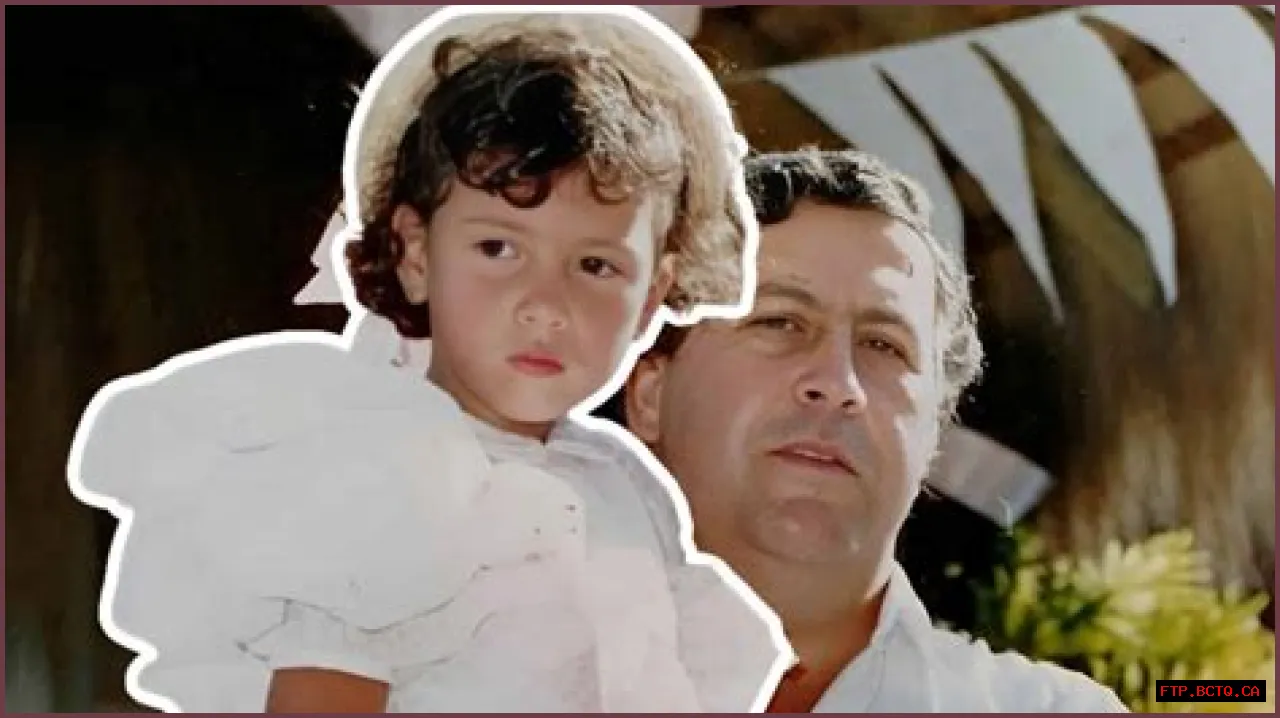
One of the most mysterious individuals closely associated with one of the most evil men in history (Pablo Escobar) is Manuela Escobar. Manuela is the daughter of the Colombian drug lord Pablo Escobar, who was the leader of the Medellin Cartel. The life of Manuela has not been determined by choices she has made. Rather, it has been determined by circumstances that have been placed upon her since her date of birth. Unlike most relatives of well-known criminals, who later find ways to get media, Manuela has consciously stayed away from the media, which has created a story of silence, survival, and the lingering touch of crime that continues to affect her.
Manuela Escobar’s Early Life in the Shadow of Her Father Pablo Escobar.
Manuela Escobar was born in Colombia in 1984 and grew up during the peak of her father’s power. Pablo Escobar was not just a criminal; he was a worldwide figure who represented the cocaine trade, violence, corruption, and fear. Although Pablo Escobar’s vast wealth allowed his family to live a life of luxury, it was a life that came with an extraordinarily high price.
Being the daughter of Pablo Escobar made Manuela’s childhood fraught with danger. Fear for their safety from rival cartels, law enforcement, and paramilitary groups led the Escobar family to be constantly under severe security. The family had the luxury of having numerous safe houses, armed security personnel to report 24/7, and, on occasion, having to move to another location very suddenly. While children from other families were able to experience stability and normalcy, during her formative years, Manuela Escobar was subject to fear, secrecy, and isolation.
A Father’s Contradictions
Pablo Escobar was a violent man, yet he was a warm and loving father to his children, especially to Manuela. Many different stories depict how he tried to keep her away from the truth of his drug empire; for example, he reportedly burned large amounts of cash to keep her warm during one of his hiding spots, creating a legend about his paternal love. However, these acts alone do not mitigate the other side of the equation: the same criminal activity that financed Manuela’s privileged lifestyle also created an environment of extreme suffering; thousands of deaths occurred as a result; and Colombia continues to endure traumatic memories because of the consequences of Escobar’s reign.
To view Manuela as having a loving father is a painful contradiction, equally being a ruthless criminal.
Pablo Escobar’s Death and Life After
On December 2, 1993, Pablo Escobar died, and for Manuela and her family this represented an unbelievably dramatic change. In a matter of days, she and other members of her family lost the one person who offered them the ultimate protection from everything in the world, but simultaneously created the greatest threat to their safety. They became the targets not just of law enforcement, but also of people wanting to take revenge on them for what Escobar had done.
Manuela and her family fled Colombia after Pablo’s death, including her mother, Maria Victoria Henio, and her brother Juan Pablo Escobar (now known as Sebastián Marroquin). The family applied for asylum in numerous nations but was denied asylum by some of these countries. Ultimately, the family built a new life in Argentina with false identities.
This was an especially hard time in Manuela’s life; she was forced to cope with being displaced and being separated from her identity. She experienced emotional turmoil over losing her identity and bearing the stigma associated with being an Escobar. While her brother dealt with their family history publicly and bravely, Manuela chose to withdraw entirely from society.
Manuela Escobar has consistently chosen to avoid all public attention and keep her life as private as possible, which is one of the reasons her life is so extraordinary compared to her brother’s and father’s public life. Manuela has not done any interviews or written any books or participated in any documentaries regarding her father, and she has refused to become involved with the media even when interest in her father’s life peaked in books, films, and television shows.
Reports state that Manuela has changed her name and has no presence on social media, and she has chosen to live a life that is far removed from any kind of public attention. The desire to be private and to reject the notoriety that goes along with her family Legacy is a reflection of Manuela’s desire to be invisible and to protect herself. Help form of self-preservation.
The Psychological Effects of A Criminal Legacy
As the daughter of one of the world’s most notorious criminals, Manuela Escobar has faced many challenges resulting from her father’s actions. The emotional and psychological scars of growing up with a father who was involved in organized crime and with whom Manuela has been associated, are evident through the trauma, anxiety, identity issues, and survivor’s guilt experienced by people like Manuela.
Social stigmas and fear associated with being the child of a criminal have resulted in a retreat from the public eye by Manuela. The challenges she faced growing up as a child of an organized crime figure can be seen in how her father impacted his family and her life long before he became famous for his criminal actions.
Absence As A Life
Currently, there are very few publicly available/up-to-date verified records concerning Manuela Escobar’s adult life. This lack of information about Manuela’s adult life is no accident. In fact, it contrasts sharply with the latest media coverage of her father and is a subtle reminder that not every story connected with the world of crime is intended for the public.
The life of Manuela Escobar is not one of fame or notoriety but instead a tragic tale of child born into an extraordinary set of circumstances, exposed to a world of violence due to things that have had nothing to do with her, and was as a result of a strong desire to break away from the legacy of a father she didn’t want.
Conclusion
The life story of Manuela Escobar illustrates the effects on a family from organized crime. In history, the focus is frequently placed on criminals and victims, but very seldom does it examine the children left behind. Manuela’s life is about the long-term trauma, dislocation, and identity crises from growing up in an environment of crime.
By living a quiet and private life, Manuela Escobar has shown a desire not to be simply defined by her father and has created an alternate view of the myth surrounding Pablo Escobar and reminds us all that there’s a whole family that will be affected by what a person does.
