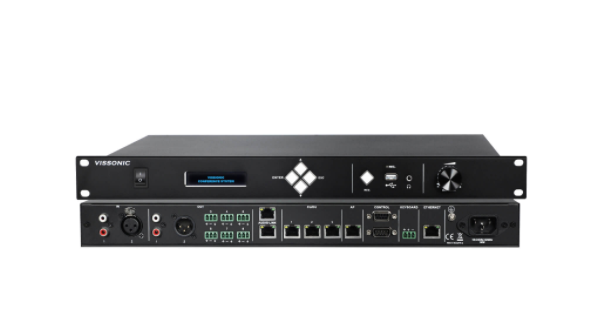
The Evolution of Sound
There are many ways in which we have changed how we experience sound over the years — such as with analog vinyl to high-resolution digital audio. At the core of this evolution is a complex yet often understated technology: the Digital Sound Processor (DSP). These powerful chips are the unsung everyday technology that is allowing us to experience music, surround sound, and communication without interference. This evolution of technology is rapidly advancing the way we experience sound in an unprecedented way, far beyond our imagination even a decade ago.
Digital Sound Process (DSP)
A Digital Sound Processor is a special micro-processor that identifies and modifies sound. A DSP is not a general-purpose processor. DSPs can simply do math like addition, subtraction, multiplication quickly and efficiently; all of these functions are key to converting raw sound data signals into living, refined sound, allowing sound to come to life and be faithful to an original source.
You can think of a DSP like a sound technician or engineer embedded within your product. If you are listening to music, watching a film, or on a video conference, your DSP is devising and improving and manipulating sound within your device to always sound its best.
How DSPs Operate
It all starts with an analog wave of sound, which is processed using an Analog-to-Digital Converter (ADC) mechanism to convert the analog signal into a digital signal. When converted to digital, a DSP performs a variety of operations, including:
- Filtering: Removing unwanted noise, music bleed, or background hum.
- Equalization (EQ): Making frequency adjustments to enhance clarity and balance in sound.
- Compression: Controlling and managing volume dynamics to prevent distortion.
- Echo Cancellation: Removing feedback from the signal in communication systems.
- 3D Spatial Sound: Providing the effect of surround sound for an immersive experience.
After processing is complete, the DSP, through a Digital-to-Analog Converter (DAC), converts the bottled-up digital signal back to an analog waveform, which can be played through speakers and/or headphones.
Key Applications of Digital Sound Processors
Digital sound processors (DSP) are widespread — from your smartphone to high-end studio gear. Here are some of the most common applications:
1. Consumer Electronics
DSPs are present in everyday devices — smartphones, TVs, laptops — where they handle sound quality, volume levels, and clarity of the microphone. They can enable active noise cancellation, virtual surround sound, and voice command.
2. Automotive Audio Systems
Modern vehicles often use a DSP to provide a premium audio experience. The DSP manages sound positioning in the vehicle, allowing it to measure the acoustics of the cabin, the road noise, and the positioning of seats. Companies such as Bose, Harman Kardon, and Bang & Olufsen use DSPs in their automotive audio products.
3. Professional Audio Equipment
Recording studios, concert venues, and broadcasting equipment depend on DSP powered tools for sound mixing, mastering, and signal processing. They offer producers a high level of control over sound with very low latency.
4. Hearing Aids and Medical Devices
DSPs can enhance a hearing aid’s intelligence by amplifying specific frequencies while filtering out background noise, and adapting to changing environments. DSPs are also used in diagnostic and medical devices that analyze audio patterns, such as stethoscopes and ultrasound systems.
5. Smart Home and IoT devices
Digital sound processors, or DSPs, are an essential component of smart home devices, like voice assistants Alexa and Google Assistant. DSPs facilitate copying, detecting, and canceling echoes, and improve clarity in the listening environment. Other smart speakers use DSPs to process sound output data, such as acoustic information about the room they are in.
Benefits of Digital Sound Processing
The increasing use of DSPs is due, in part, to the types of benefits provided by the devices themselves:
- Real-Time Processing: DSPs complete sophisticated calculations in an instant, meaning the optimization of sound happens in real-time.
- Precision: Digital processing provides a much higher level of accuracy than analog circuits.
- Flexibility: As software-based extractions, improvements to the functionality of DSPs can be made in software-based updates, the hardware does not need to be replaced to achieve improved sound.
- Energy Efficiency: Current DSPs have the capability to accomplish sound processing while using limited amounts of power, ideal for battery-powered devices.
- Improved Customization: With DSP devices, owners can personalize their listening experience using equalizer presets, spatial audio modes, and noise-cancellation or noise-filtering processing.
Most Recent Advances in DSP Technology
With digital sound technology developing in various manners several advances are contributing to the future of DSPs:
1. Artificial Intelligence (AI) Audio Processing
AI is being incorporated into DSPs to make sound processing more learner-oriented. AI-enabled DSPs can learn user preference, analyze the surrounding acoustic environment, and make automatic adjustments to settings for an optimal experience.
2. Spatial Audio and Immersive Sound
DSPs now enable 3D audio systems that produce sound environments to rival real life. This type of sound technology is critically important in virtual reality (VR), augmented reality (AR), and gaming where spatial sound enhances the immersive experience by replicating realistic sound direction and distance.
3. Remote DSP Solutions
Thanks to cloud-based computing, audio processing is no longer dependent solely on hardware. Remote DSP product systems can benefit streaming services providing equal sound quality of delivery regardless of the device and network level.
4. Miniaturization and Edge Processing
As devices become smaller there are dsp’s that are designed with more robust capacity in either power efficiency or speed. Edge based DSPs have the ability to complete complicated sound processing remotely on the device which limits the need for the devices to connect to the internet and improve user account privacy.
5. Alignment with 5G and IoT
The development of 5G networks offers ultra low latency sound processing paving the way for real time communication, cloud gaming, and remote audio mixing advancements, supported by high DSP architectures.
Future Outlook
The next 10 years will be an exciting time filled with possibilities for DSP technology. We will see further market integration with artificial intelligence, machine learning, and edge computing to create individualized sound space. The uses for DSPs will be endless: from smart hearing aids that automatically adjust to background noise, to smart speakers that variate music based on your mood.
Furthermore, as virtual and augmented reality platforms develop and become more common, immersive audio will become a large part of our digital journey — and DSPs will be the machine that creates that experience. Even in telemedicine, education, and entertainment, DSPs will change how we communicate and experience sound.
Conclusion
The future is digital — and DSPs are the future! DSPs have changed the way we capture, manipulate, and experience sound; studio-quality audio is now accessible at our fingertips. DSPs will allow us to continue to Android the gap between artificial intelligence and human perception; they will be machines that not only allow us to hear, but FEEL sound.
